


A Trip for Everyone: Oaxaca
9 days at a relaxed pace, from the mountains to the Pacific
Oaxaca has the longest bird list of any state in Mexico, more than 750 species, and more than 50 of them are endemic. It is also one of the most culturally rich states in the country, with Zapotec villages, ancient cities, busy markets, crafts and a food tradition known around the world.
This is the easy-paced version of our Oaxaca birding tour. We made it for birders who are still building their list, for photographers, for couples, and for anyone who wants to see Mexico's birds and also enjoy its culture and food, without rushing from one spot to the next. You don't need years of experience, but you should be comfortable with your binoculars and happy to be out early, because that is when the birds are. Even at this calmer pace, groups usually record around 260 species.
On this route we cross five very different habitats in nine days: the dry valleys around Oaxaca City, pine-oak forest at 2,900 m, cloud forest and shade coffee farms, the tropical dry forest of Huatulco, and the open waters of the Pacific. Each habitat has its own birds, so the list keeps growing every day. And every day includes a cultural visit: Zapotec ruins, weaving and wood-carving families, town markets, a walking tour of Oaxaca City, a coffee farm, and plenty of good Oaxacan food.


Duration: 9 days / 8 nights. Group size: 4 to 8 guest
Starts: Oaxaca City airport (OAX) Ends: Huatulco airport (HUX)

The Route

Day 1
Arrival in Oaxaca City
We pick you up at Oaxaca airport and take you to our hotel in the historic center, about 30 minutes away. If you arrive early, we can take an easy walk around the old streets nearby.
In the evening we have a welcome dinner with classic Oaxacan dishes like mole and tlayudas. We go over the plan for the trip, talk about what to expect each day, and answer your questions.
.jpeg)
Santo Domingo church, Oaxaca City
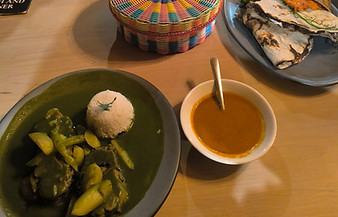
Mole and tlayudas on the first night
⏾ First night in Oaxaca City
Day 2
Teotitlán del Valle, Mitla and Yagul
We leave early for Teotitlán del Valle, a Zapotec village an hour from the city, surrounded by dry scrub and fields at the foot of the mountains. This is the best birding of the day, so we spend the whole morning here. The road up toward Benito Juárez and the shore of Piedra Azul dam are good for the Oaxaca Sparrow and the Bridled Sparrow, two birds you will not see anywhere else in the world, along with the Ocellated Thrasher, the Dwarf Vireo and Boucard's Wren. We have lunch in the village. Teotitlán is famous for its wool rugs, and after lunch a local weaving family shows us how they dye wool with cochineal, indigo and other plants, and how they work the wooden pedal loom. In the afternoon we drive to Mitla, known for the stone mosaics that cover the walls of its palaces. Each small stone was cut and set by hand to form geometric patterns, and there is nothing quite like it at other sites in Mexico. We finish the day birding at Yagul, a Zapotec city built on a rocky hill in the Tlacolula Valley. The cactus and dry scrub around the site are good for the Gray-breasted Woodpecker, and the flowering plants bring in the Beautiful Hummingbird and the Dusky Hummingbird. The light is soft at this hour and the view over the valley from the hill is worth the short walk up.

Teotitlán del Valle
.jpeg)
Wool rugs in Teotitlán del Valle
.jpeg)
A weaving family shows how they dye wool with plants and insects

Yagul


Oaxaca Sparrow
Bridled Sparrow
⏾ Second night in Oaxaca City
Day 3
La Cumbre Ixtepeji and a walking tour of Oaxaca City
Today we drive about 45 minutes up into the Sierra Norte, to the pine-oak forest of La Cumbre, at 2,700 to 2,900 m. Mornings up here are cold, so bring a warm jacket. Our first stop is Comedor del Paso, a small roadside restaurant run by Don Jacobo and his family. Every morning they put out corn at the edge of the forest, and Long-tailed Wood-Partridges often come out to feed. This endemic is shy and very hard to see in most places, so a good look at it is a treat for any birder. Collared Towhees and Rufous-capped Brushfinches come in too. We have breakfast here, surrounded by Don Jacobo's paintings of the local birds. After breakfast we walk slowly along the forest trails looking for mixed flocks. Noisy groups of Gray-barred Wrens often give them away, and Red Warblers, Mountain Trogons and, with some luck, the Dwarf Jay travel with them. This is the main reason we come up here: Ixtepeji is one of the few reliable places for the Dwarf Jay, and we give it all the time it needs. We bird the area until early afternoon and drive back to Oaxaca City. In the evening we take a walking tour of the historic center: Santo Domingo and its gold-covered chapel, the zócalo, and the 20 de Noviembre market, where a whole hall is given over to grills of meat and smoke. We finish with dinner and, if you want, a mezcal tasting.

Long-tailed Wood-Partridge
.jpeg)
Roadside stop in the Sierra Norte

Collared Towhee
.jpeg)
Tlayuda, one of the classics of Oaxacan food
⏾ Third night in Oaxaca City
Day 4
Monte Albán, alebrijes and the road to San José del Pacífico
We get to Monte Albán early, when birds are active around the site. This was the main city of the Zapotecs, built on a flattened mountaintop above Oaxaca City, and today it is a UNESCO World Heritage Site. After birding we walk around the Great Plaza, the ball court and the carved stones known as the Danzantes, with views over the three arms of the valley. Then we head south. On the way we stop in San Martín Tilcajete to visit a family workshop of alebrijes, the bright wooden figures of real and imaginary animals that are carved and painted by hand. After lunch we continue into the Sierra Sur. The road is long and curvy, about 2.5 hours, with good views as we climb through the pine forest. We stay two nights at Cabañas Puesta del Sol, wooden cabins on the edge of the forest in San José del Pacífico, with a wide view over the mountains. There are plenty of birds right around the cabins, so we drop the bags and start birding as soon as we arrive.

Monte Albán, above Oaxaca City

Pileated Flycatcher
⏾ First night in San José del Pacífico
Day 5
San José del Pacífico
No long drives today. San José del Pacífico is a small mountain village at about 2,400 m, surrounded by pine and oak forest, and a nice place to slow down. We spend the morning birding on quiet roads and forest edges near the village. This area is good for hummingbirds like the tiny Bumblebee Hummingbird and the Garnet-throated Hummingbird, and for the White-throated Jay, a bird found only in the mountains of Oaxaca and Guerrero. The afternoon is free. You can rest at the cabins, walk along the main street where local artisans sell woven goods, or stay out for the sunset over the clouds, one of the best photo moments of the trip. If you want to try it, we can book a temazcal, the traditional steam bath of Mesoamerica, prepared with local herbs.
.jpeg)
Birding the forest edges near the village
.jpeg)
Morning light over the Sierra Sur
.jpeg)
Pine and oak forest around San José del Pacífico

Chestnut-sided Shrike-Vireo
⏾ Third night in Oaxaca City
Day 6
San José del Pacífico, Pluma Hidalgo and down to the coast
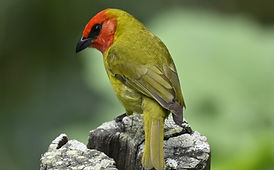
We use the first hours of the morning around San José del Pacífico to look for the mountain birds we still need. The White-throated Jay and the Garnet-throated Hummingbird are often the ones we go back for. After that we start driving down toward the coast, with birding stops along the way. As we lose altitude, the pine forest gives way to humid cloud forest and the birds change with it. This is where we look for the Blue-capped Hummingbird, found only in Oaxaca, along with the Gray-crowned Woodpecker, Mexican Hermit and Red-headed Tanager. We spend the afternoon in Pluma Hidalgo, a small coffee town at about 1,300 m. Oaxaca's first coffee plantation was started in this area, and Pluma coffee is well known among coffee lovers. We visit a farm, walk among coffee plants growing under tall shade trees, see how the beans are picked, washed and dried, and finish with a cup of the coffee made right there. Birding inside a shade coffee farm is easy and productive: the trees that shade the coffee are full of tanagers, warblers and hummingbirds. Late afternoon is a good time in the cloud forest, so we keep our eyes open for the Northern Emerald-Toucanet and the Golden Vireo. From the viewpoint above town you can see all the way to the Pacific on clear days. Then we drive down to Huatulco, about 1.5 hours. The air gets warmer and the forest gets drier as we go.

Coffee in the middle of town, Pluma Hidalgo
_JPG.jpg)
Red-headed Tanager

Northern Emerald-Toucanet
⏾ First night in Huatulco
Day 7
Boat trip on the Pacific and night birding
We leave early from the Santa Cruz dock for a boat trip of about 4 to 5 hours into deeper water. Seabirds like the Cocos Booby, Black Storm-Petrel and Wedge-tailed Shearwater are our main targets, but there is much more to see out here. Dolphins show up on most trips, sea turtles are common, and humpback whales pass along this coast in winter, mostly from December to March. The sea decides what we see, so every trip is different. We are back by lunch, and the afternoon is free to rest or swim. After dark we go out again for a couple of hours to look for night birds. The Northern Potoo sits upright on a bare branch and looks like a broken stump until it moves, which is why people here call it pájaro estaca. We also listen for the Pacific Screech-Owl and the Mottled Owl. We finish with dinner in La Crucecita, the main town of Huatulco.
.jpeg)
One of the bays of Huatulco

Cocos Booby
Photo: Eric VanderWerff

Wedge-tailed Shearwater
Photo: Eric VanderWerff
⏾ Second night in Huatulco
Day 8
Huatulco National Park, Copalita and the bays
We start early in Huatulco National Park, one of the best preserved areas of tropical dry forest on Mexico's Pacific coast. The trails are easy and flat, and mornings are busy with birds: Citreoline Trogon, Russet-crowned Motmot, White-throated Magpie-Jay and, with luck, the Orange-breasted Bunting, a small endemic that is bright blue above and orange below. This is a very different set of birds from anything we have seen so far, and an easy place to photograph. Late in the morning we visit the Copalita Eco-Archaeological Park, near the mouth of the Copalita River. A short trail through the forest leads to a ball court, temples and a cliff-top viewpoint over the ocean. There is also a small museum with pieces found at the site. The afternoon is free for the bays. Huatulco has nine of them, and several are only reachable by boat. It is a good place to swim and to snorkel over the reef, and we can arrange a boat for whoever wants to go. We finish the day with our farewell dinner.
.jpeg)
The coast at Copalita

Orange-breasted Bunting

Golden-cheeked Woodpecker
⏾ Third night in Huatulco
Day 9
Las Ninfas and departure
For those who want one last walk, we go early to Las Ninfas, a small reserve run by a local family, with easy trails through dry forest and a good bird list. It is a nice place to look for anything still missing from our list: Painted and Blue Buntings, the Turquoise-crowned Hummingbird and the Lesser Ground-Cuckoo are all possible here. Then we have breakfast, pack, and have an early lunch before the transfer to Huatulco airport.
